
The human immune system is not a fixed defense mechanism. From the first months of life to advanced age, immune cells continuously change in number, function, molecular activity, and interactions with their environment.
Recent advances in single-cell and multi-omic technologies are allowing researchers to study these changes with unprecedented resolution. Rather than viewing immunity as a system that simply becomes weaker with age, researchers are uncovering distinct patterns of immune development, adaptation, and aging.
The Immune System Across the Lifespan
Immune development begins before birth and continues throughout life. Exposure to microorganisms, vaccination, environmental factors, and previous infections all contribute to shaping immune-cell populations and their functional states.
A 2026 open-access study in Nature Communications mapped peripheral immune cells from 167 healthy individuals ranging from 2 months to 105 years of age. Using single-cell RNA sequencing and single-nucleus ATAC sequencing, researchers identified major changes in immune-cell populations and molecular programs across the lifespan.
The study revealed particularly dynamic immune remodeling during early life, while aging was associated with substantial changes in several immune-cell populations.
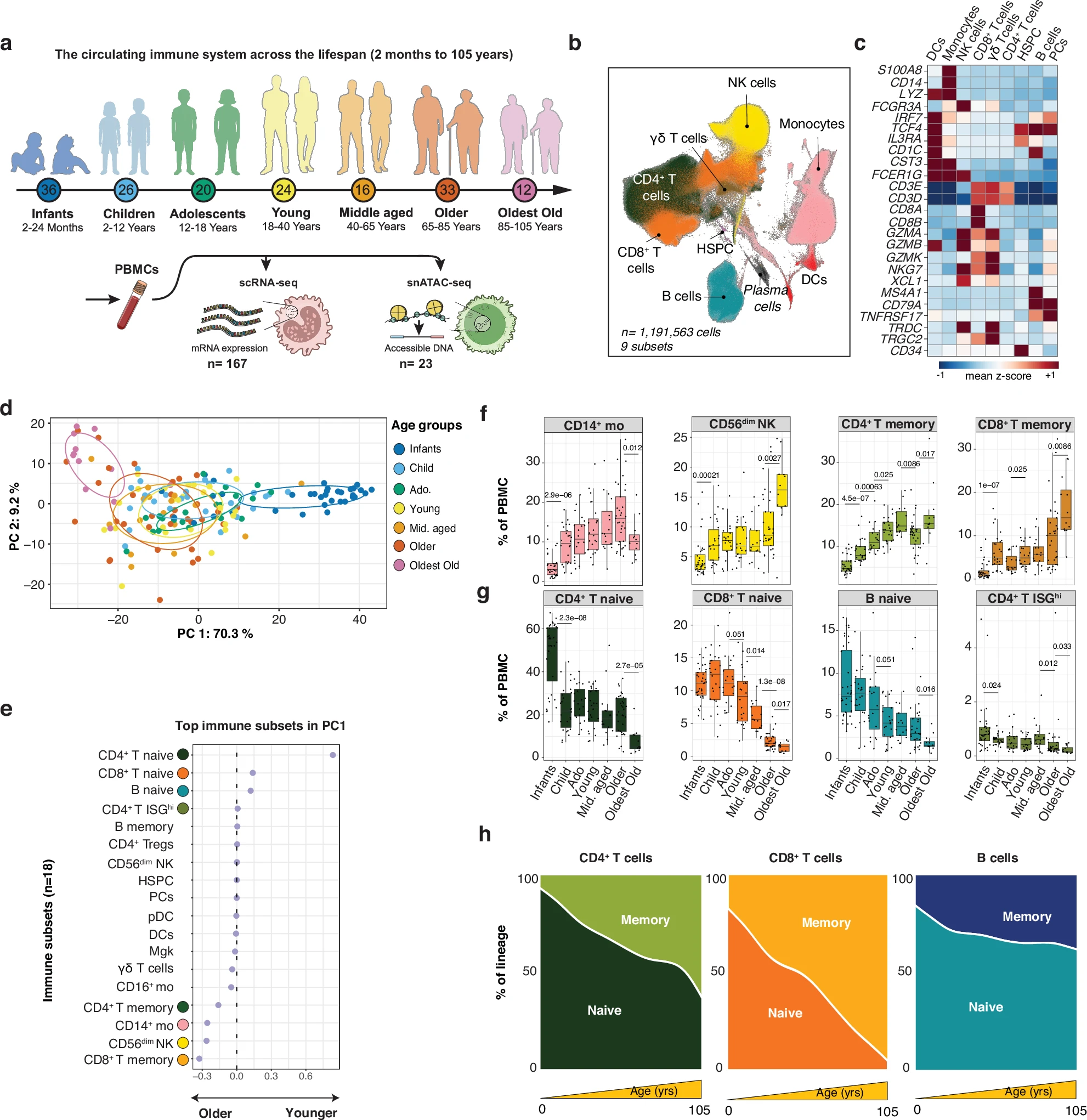
Figure 1. Immune-cell changes across the human lifespan.
Single-cell profiling of PBMCs from 167 healthy individuals aged 2 months to 105 years reveals distinct immune-cell compositions across age groups and highlights the extensive remodeling of immunity from infancy to old age. Adapted from Nehar-Belaid et al., Nature Communications (2026).
Immune Development Across Life
The immune system develops progressively from infancy through adulthood, with different immune-cell populations following distinct trajectories.
A 2025 study investigated healthy individuals across multiple age groups using single-cell RNA sequencing, T-cell and B-cell receptor sequencing, mass cytometry, and other approaches. The researchers identified age-dependent changes across immune-cell populations and found that some cell types followed complex, nonlinear trajectories rather than simply increasing or decreasing with age.
These findings demonstrate that immune development is a dynamic process involving
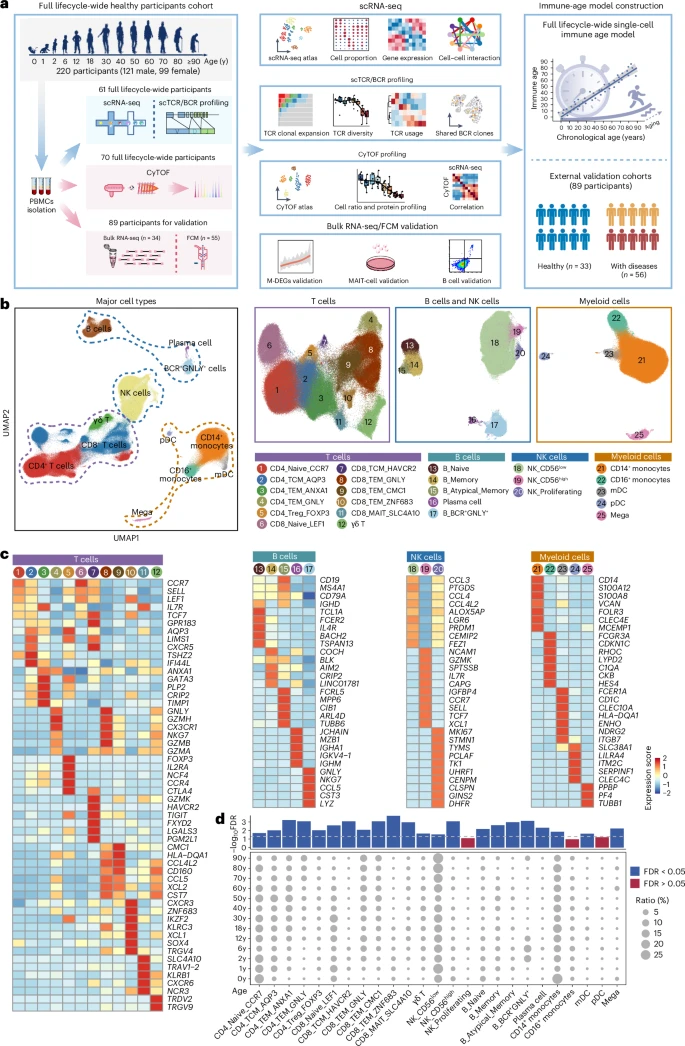
Figure 2. Overview of the integrated single-cell analysis of peripheral immune cells across 13 age groups. The study combined scRNA-seq, T-cell and B-cell receptor sequencing, CyTOF profiling, and additional validation approaches to characterize immune-cell composition, molecular profiles, and receptor diversity across the lifespan. The analysis identified 25 distinct peripheral immune-cell subsets, providing a detailed view of how immune-cell populations and their molecular characteristics change from early life to old age. Adapted from Wang et al., Nature Immunology (2025
Infant and Adult Immunity
Infant immunity has distinctive characteristics rather than simply representing an immature version of adult immunity.
The 2026 lifespan study identified increased proportions of CD16⁺ monocytes and plasmacytoid dendritic cells in infants, together with expanded populations of naïve T cells and constitutive interferon-related gene activity. These characteristics gradually change as the immune system develops.
Understanding these early-life immune signatures can provide insight into how immune responses are established and how they differ from those observed later in life.
Immune Changes During Aging
Aging is accompanied by extensive remodeling of immune-cell populations.
The 2026 lifespan study found substantial age-associated changes among conventional CD8⁺ T cells, including a reduction in naïve populations and an increase in GZMK⁺ and TEMRA cells. Older individuals also showed increased proportions of TEMRA cells, adaptive natural killer cells, and KLRF1⁺ γδ T cells.
These changes illustrate that immune aging is not simply a loss of immune cells. Instead, different populations undergo distinct changes in abundance, molecular activity, and functional state.
Single-Cell Analysis of Immune Changes
Traditional approaches often measure immune populations as groups. Single-cell technologies provide a much more detailed view by allowing researchers to examine molecular differences between individual cells.
Single-cell RNA sequencing can reveal gene-expression patterns and cellular states, while T-cell and B-cell receptor sequencing provides information about immune-receptor diversity. When combined with protein profiling and other approaches, these technologies can provide a multidimensional view of immune-cell populations.
Recent lifespan studies demonstrate how these technologies can be combined to investigate immune development and aging at cellular resolution.
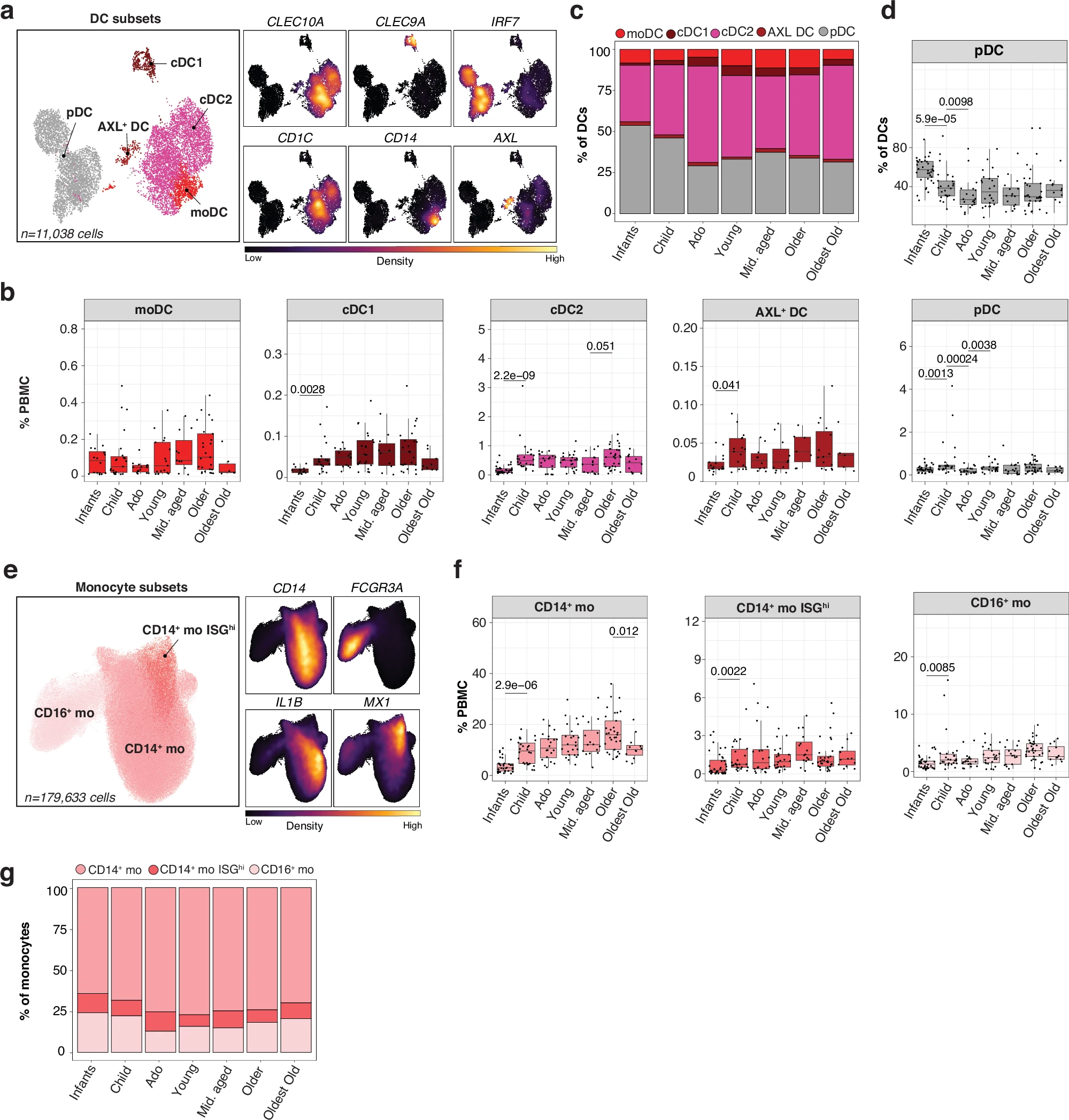
Figure3. Changes in dendritic-cell and monocyte populations across the human lifespan. Single-cell analysis reveals distinct age-associated patterns among dendritic-cell and monocyte subsets, including changes in pDCs, conventional dendritic cells, and CD14⁺ and CD16⁺ monocytes. Several myeloid populations increase with age, illustrating how the cellular composition of the immune system is progressively remodeled from infancy to old age. Adapted from Nehar-Belaid et al., Nature Communication
read more
Measuring Biological Immune Age
Chronological age does not completely describe the biological state of the immune system.
A 2025 open-access study developed cell-type-specific single-cell immune-aging clocks using data from 1,081 healthy individuals aged 18–97 years. The models investigated aging patterns across major immune-cell populations, including monocytes, CD4⁺ T cells, CD8⁺ T cells, natural killer cells, and B cells.
The researchers also examined immune-aging signatures associated with infection and vaccination. Their findings highlight the possibility of studying biological immune age through molecular and cellular characteristics rather than chronological age alone.
Tissue-Specific Immune Aging
Immune cells do not function independently of their surroundings. Their characteristics and activities can vary considerably depending on the tissue in which they are located.
A 2025 study profiled more than 1.25 million immune cells from blood and multiple lymphoid and mucosal tissues collected from 24 organ donors. The researchers found that tissue location strongly influenced immune-cell composition and function, while age-associated changes differed between tissues and immune-cell lineages.
These findings suggest that understanding immune aging requires examining both circulating immune cells and the tissue environments in which they operate.
Research study: read more
Multi-Omic Studies of Immune Aging
The combination of single-cell sequencing, proteomics, flow cytometry, and other technologies is creating increasingly detailed maps of human immunity.
A 2025 Nature study profiled more than 300 healthy adults aged 25–90 years using single-cell RNA sequencing, proteomics, and flow cytometry. The resulting resource contained more than 16 million peripheral blood cells and 71 immune-cell subsets.
The study identified age-associated changes in immune-cell states and provided a large-scale resource for investigating how immune composition and molecular activity change during adulthood and aging.
Why Immune Aging Matters
Understanding how immunity changes throughout life could help researchers investigate why susceptibility to infections, responses to vaccination, and immune-related diseases vary between individuals and across age groups.
It may also contribute to improved approaches for immune monitoring, vaccination strategies, and personalized medicine.
Rather than simply becoming “weaker,” the immune system appears to undergo continuous remodeling throughout life. Understanding these changes at cellular and molecular resolution could help researchers distinguish natural aging processes from changes associated with disease or environmental exposure.
Research Resources
Explore the recent open-access studies discussed throughout this article:
- Nature Communications — 2026: Single-cell map of the healthy human immune system across the lifespan reveals unique infant immune signatures
- Nature Immunology — 2025: Integrating single-cell RNA and T cell/B cell receptor sequencing with mass cytometry
- Nature Aging — 2025: Single-cell immune aging clocks
- Nature Immunology — 2025: Multimodal profiling of immune cells across tissues and age
- Nature — 2025: Multi-omic profiling of age-related immune dynamics